


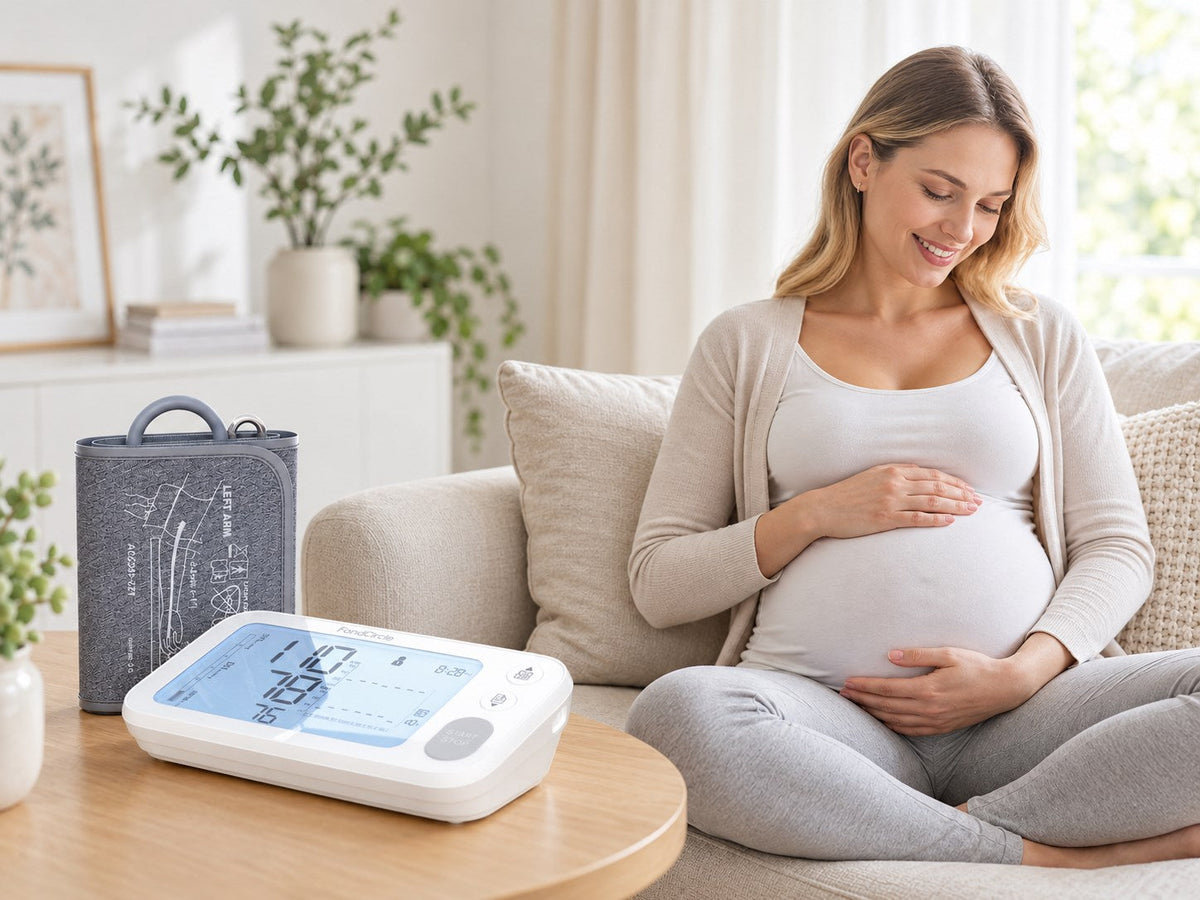
A blood-pressure reading can matter during pregnancy even when you feel well. Some people with preeclampsia have no noticeable symptoms, so regular prenatal assessment remains important. If your maternity-care team has asked you to monitor at home, a dated series of readings can add useful context. The readings alone cannot diagnose or rule out preeclampsia.
The thresholds and care recommendations below come from U.S. guidance. If either number reaches the severe range—at least 160 mm Hg systolic or 110 mm Hg diastolic—or you have warning symptoms, follow your maternity team’s urgent-care instructions and seek prompt medical care. If you receive care outside the United States, follow the thresholds and emergency pathway used in your location.
At a glance
- Preeclampsia can develop without noticeable symptoms, so feeling well does not replace regular prenatal assessment.
- A dated series of blood-pressure readings can give your maternity-care team useful context. The readings cannot diagnose or rule out preeclampsia by themselves.
- In U.S. guidance, a positive screen for new-onset hypertension uses a systolic pressure of at least 140 mm Hg or a diastolic pressure of at least 90 mm Hg, confirmed with appropriate repeat measurements. Severe hypertension is at least 160 systolic or 110 diastolic.
- Follow urgent-care instructions promptly for a severe reading or warning symptoms such as a persistent headache, vision changes, upper-abdominal pain, swelling of the face or hands, or trouble breathing. Do not wait at home merely to complete a clinical confirmation interval.
- Postpartum preeclampsia can occur after delivery, including in someone without a pregnancy diagnosis, and may occur up to six weeks later.
Why blood pressure matters when you feel well
Preeclampsia is a pregnancy complication that usually develops after 20 weeks. It involves high blood pressure together with protein in the urine or other signs that organs are affected. It can also develop after delivery or in someone who had high blood pressure before pregnancy. The CDC’s pregnancy guidance and the U.S. Preventive Services Task Force definition describe these clinical features.
Preeclampsia deserves attention because it can affect the kidneys, liver, brain, or placenta. Possible serious complications include early birth or stroke. Seizures associated with preeclampsia are called eclampsia, a medical emergency. These are possible outcomes, not what happens in every case. The National Institute of Child Health and Human Development explains the risks, and the CDC defines eclampsia.
Some people with preeclampsia have no noticeable symptoms. That is one reason blood pressure is checked repeatedly during prenatal care. For pregnant people without a known hypertensive disorder or chronic hypertension, the U.S. Preventive Services Task Force recommends blood-pressure screening throughout pregnancy, including at each prenatal visit.
Home readings may also be part of a plan from your care team. Clinicians interpret those readings alongside prenatal assessments, symptoms, medical history, pregnancy timing, and any follow-up tests. For an overview of routine checks and home monitoring, see our guide to blood pressure monitoring during pregnancy.
What blood pressure contributes to preeclampsia assessment
A blood-pressure result contains two values. The systolic value—the upper number—reflects pressure when the heart contracts. The diastolic value—the lower number—reflects pressure between beats.
In U.S. screening guidance, a positive screen for new-onset hypertension during pregnancy is a systolic pressure of at least 140 mm Hg or a diastolic pressure of at least 90 mm Hg, measured twice at least four hours apart. Either value can meet the threshold.
That four-hour interval is part of a clinical screening and confirmation criterion. It is not an instruction to delay care when a reading is severe or concerning symptoms are present.
An elevated reading can prompt further evaluation. Clinicians may consider repeat measurements, when the change developed, protein in the urine, symptoms, and signs that organs such as the kidneys, liver, lungs, or blood-clotting system may be affected. The USPSTF definition of preeclampsia reflects this broader clinical picture.

Clinical assessment considers readings alongside symptoms, history and test findings; readings alone cannot diagnose or rule out preeclampsia.
Treat a high home reading as a reason to follow the repeat-measurement and contact instructions from your maternity-care team. A normal-looking reading also should not be used to dismiss concerning symptoms.
What a series of readings can add
One reading is a snapshot. A dated series can show whether a result was isolated, repeated, or changing over time. It also gives your care team a way to compare recent values with your usual range and with readings taken during prenatal visits.
Research helps explain why change over time may carry useful information. A 2026 retrospective U.S. cohort study examined outpatient clinical readings recorded during the first 20 weeks of pregnancy. Different systolic blood-pressure trajectory groups were associated with different rates of hypertensive disorders later in pregnancy, and adding the trajectory groups improved the performance of a statistical risk model.
The study found a population-level association using electronic health-record measurements and a fitted research model. It did not establish a trend rule that an individual can use to diagnose or exclude preeclampsia. It also did not test whether consumer home tracking improves health outcomes.
Evidence for home monitoring as an additional screening method remains limited. In the principal trial discussed by a USPSTF evidence review, adding home measurement to routine prenatal screening was not associated with earlier diagnosis.
The practical value of a series is the context it gives your maternity-care team. Prenatal screening and clinical evaluation remain necessary.
When a reading or symptom needs prompt attention
The USPSTF defines severe hypertension in pregnancy as a systolic pressure of at least 160 mm Hg or a diastolic pressure of at least 110 mm Hg.
If either number reaches the severe range, use your maternity team’s urgent-contact or emergency instructions now. Do not wait at home merely to complete a four-hour clinical confirmation interval. If you cannot reach your care team, use the emergency pathway they provided or seek emergency medical care.
The CDC lists the following warning symptoms:
- a headache that will not go away;
- vision changes, including blurred vision or seeing spots;
- pain in the upper abdomen;
- nausea or vomiting;
- swelling of the face or hands;
- sudden weight gain; and
- trouble breathing.
These symptoms can have more than one cause and cannot diagnose preeclampsia by themselves. They still call for prompt medical guidance under your care plan, even when your most recent home reading is below a published threshold. If you feel that something is seriously wrong, seek medical care right away.
From readings to a useful conversation
When you contact your maternity-care team, a compact record can help them understand what is happening. Include:
- Where you are in pregnancy: your gestational week and any risk factors your clinician has discussed with you.
- What changed: your usual range and the dated systolic and diastolic values you recorded.
- How you felt: any warning symptoms that occurred with or near the readings.
- What your plan says: the instructions you were given for repeating a measurement, contacting the care team, or obtaining urgent care.
The CDC advises contacting your clinician when your blood pressure is higher than usual or when you have symptoms of preeclampsia. If you notice a sustained change that remains below 140/90 mm Hg, share it according to your individualized contact plan. Your care team can interpret the change in light of your usual range, pregnancy history, symptoms, and clinical findings.

Bring readings, symptoms and your care-team instructions to the conversation. Do not delay urgent care to complete a record.
Remember the postpartum period
Delivery does not immediately end the risk. The CDC notes that postpartum preeclampsia can occur in someone who was not diagnosed during pregnancy. It is typically diagnosed within 48 hours after delivery, but it can occur up to six weeks later.
After delivery, seek prompt medical care for possible preeclampsia symptoms and clearly tell the clinician or emergency team that you recently gave birth. For U.S. readers, the CDC advises contacting a health care provider or calling 911 right away for symptoms of postpartum preeclampsia. Continue to follow the discharge and blood-pressure follow-up instructions from your maternity-care team.
Keep your prenatal and postpartum appointments, follow your individualized action plan, and bring your dated readings and symptom notes when you contact your care team. Tracking is most useful when it supports a timely, informed clinical conversation.
If you are comparing equipment for a home plan, browse our blood pressure monitors and check the exact model with your care team.
FondCircle publishes this guide and sells the monitor shown below.
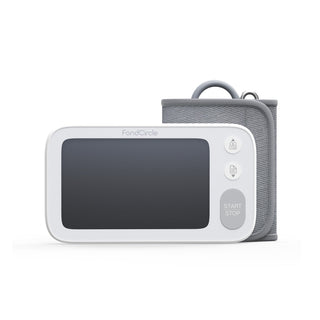
FondCircle FBP-A2
If your care team has asked you to monitor at home, review the FBP-A2 product information and its separate pregnancy-validation summary with them.
A home reading alone cannot diagnose preeclampsia. Follow your maternity team’s monitoring and urgent-care plan.



Share:
Why monitor blood pressure during pregnancy?
How to Choose a Blood Pressure Monitor for Pregnancy: Validation Matters More Than the Label