


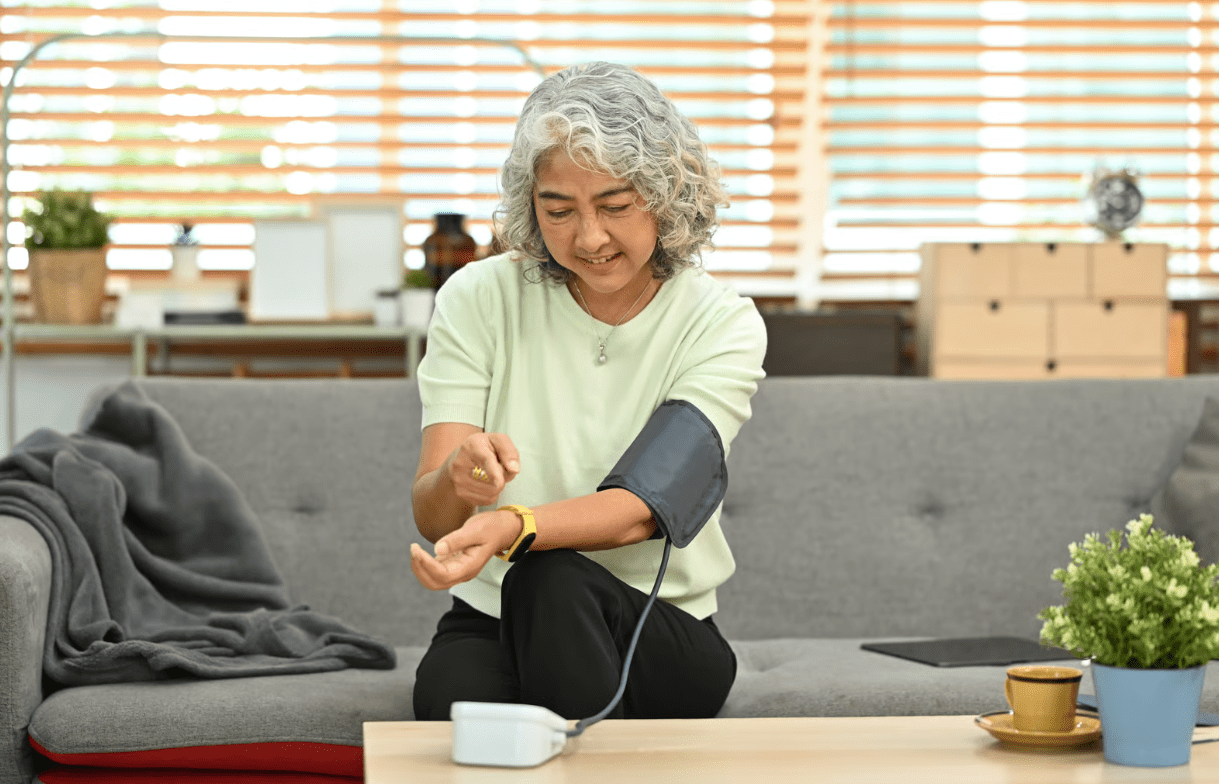
High blood pressure (hypertension) is often called the “silent killer” because it can cause serious complications like heart disease, stroke, and kidney problems—all without obvious symptoms. Regular monitoring at home empowers you to track trends, catch changes early, and work closely with your healthcare provider. Using a smart device like the FondCircle Smart Arm Blood Pressure Monitor means you get accurate readings, digital tracking, and convenience.
In this blog post we’ll show you not only why home monitoring is important, but how to do it properly using the FondCircle App & Smart Arm Blood Pressure Monitor, plus what to look out for to ensure you’re getting reliable data.
What are the benefits of monitoring blood pressure at home?
Monitoring blood pressure at home offers a range of benefits that help you take control of your health. Here are some of the key advantages:
Early Detection of Health Issues
Regularly tracking your blood pressure can help detect potential issues early, even before symptoms appear. Hypertension often has no obvious signs, so frequent measurements give you a better understanding of your baseline and make it easier to notice any concerning changes. Early detection allows for prompt action, which can prevent complications like stroke, heart disease, and kidney damage.
Better Blood Pressure Control
Having the ability to measure your blood pressure at home means you can monitor how well your treatment plan is working, whether it’s lifestyle changes (like diet and exercise) or prescribed medications. Tracking your readings helps you and your doctor adjust your care plan as needed for optimal results. It also gives you direct feedback about the effectiveness of your interventions, whether you're managing it with medication or trying natural methods like relaxation and diet changes.
Increased Awareness and Empowerment
When you take charge of your own health by regularly measuring your blood pressure, you become more aware of your body’s signals and the impact of lifestyle factors on your heart health. Monitoring at home empowers you to make more informed decisions about your lifestyle choices, such as your diet, exercise routine, or stress management techniques.
Reduced "White Coat Syndrome"
For many people, the stress of visiting a doctor’s office can cause temporary increases in blood pressure, a phenomenon known as "white coat syndrome." By measuring at home, you get a more accurate picture of your true, everyday blood pressure levels, as you’re not influenced by the stress or anxiety of a medical visit. This can lead to more accurate readings over time.
Convenience and Consistency
At-home monitoring is far more convenient than making regular visits to the doctor. You can check your blood pressure at a time that’s comfortable for you, whether that’s in the morning, before bed, or after exercise. This convenience also allows you to track your blood pressure consistently, which gives a more complete picture of your health than a single reading taken in a clinic.
Improved Doctor-Patient Communication
Having a detailed log of your blood pressure readings can be a valuable tool in doctor-patient communication. Instead of relying on a single measurement taken during a visit, you can share your home-monitoring data over time, which can help your doctor make better-informed decisions about your treatment. It also gives them insights into your lifestyle and how well any prescribed medications are working.
Motivation for Lifestyle Changes
Seeing your blood pressure readings can serve as an important motivator to stick to a healthy lifestyle. If you notice that high blood pressure persists or worsens, it might encourage you to adopt healthier habits—like exercising, reducing sodium intake, or cutting back on alcohol—that can help lower your readings. Conversely, noticing improvements after making changes can reinforce positive behavior and keep you motivated.
Less Reliance on Infrequent Doctor Visits
For people with chronic hypertension, constant doctor visits can be a hassle. Home monitoring can reduce the need for frequent checkups, making it easier to manage the condition over the long term. This is particularly useful for those with a busy lifestyle or limited access to healthcare facilities.
Better Management for Elderly or those with Chronic Illness
For elderly individuals or those managing chronic conditions like diabetes, regular blood pressure monitoring can be crucial. Home devices allow caregivers or family members to easily track the health of their loved ones and respond quickly if readings are too high or too low. This can be especially important for older adults who may have difficulty remembering or communicating about their symptoms.
Cost-Effective Health Management
Regular doctor visits to measure blood pressure can add up over time, especially for those who need frequent checkups. Home monitoring eliminates the need for multiple office visits, which can be more cost-effective. It also reduces the risk of emergency care costs by catching problems early.
How often should you check your blood pressure at home?
Always measure at the same time of day, with your arm at heart level, and track your results. Smart devices like the FondCircle Smart Arm Blood Pressure Monitor make this easy by automatically logging and storing your readings.
-
If you’re new to monitoring: Check twice a day for the first week — once in the morning (before food or meds) and once in the evening. Take two readings each time and record them.
-
If your blood pressure is stable: Measure 1–2 times per week at consistent times.
-
If you’re adjusting medication: Check daily for 1–2 weeks, then reduce as your readings stabilize.
-
If you have hypertension or a chronic condition: Measure once daily (or as your doctor advises).
-
If your BP is normal: Check every 1–2 weeks for prevention.
Can home blood pressure monitoring replace doctor visits?
No — home blood pressure monitors can’t replace doctor’s visits. They’re great for tracking and managing your readings between appointments, but only your doctor can interpret results in context, adjust medications, and diagnose underlying conditions. Use home monitoring to complement, not replace, professional care.
What is the correct way to measure blood pressure at home?
-
Pick the right time: Measure at the same times each day — ideally morning (before food or meds) and evening. Avoid caffeine, smoking, or exercise 30 minutes beforehand.
-
Sit correctly: Sit upright in a chair with your back supported, feet flat, and legs uncrossed. Rest quietly for 5 minutes before measuring.
-
Position your arm: Rest your arm on a table so it’s at heart level.
-
Apply the cuff properly: Wrap the cuff snugly around your bare upper arm, about 1 inch (2–3 cm) above the elbow crease.
-
Start the measurement: Stay still and silent while the cuff inflates and deflates.
-
Record your results: Take two readings, one minute apart, and record the average.
-
Track trends: Use your blood pressure monitor’s memory and the FondCircle app to log readings over time.
Why do my home blood pressure readings differ from my doctor’s?
It’s completely normal for your home blood pressure readings to differ from your doctor’s. A few common reasons explain the difference:
-
White coat effect: Many people’s blood pressure rises temporarily in a medical setting due to anxiety or stress. At home, you’re more relaxed, so readings are often lower.
-
Different environments: Factors like temperature, background noise, or recent activity can influence your readings.
-
Measurement technique: Differences in arm position, cuff size, or body posture between home and clinic can affect accuracy.
-
Device calibration: Home monitors may vary slightly from the professional-grade equipment your doctor uses.
-
Timing of measurement: Blood pressure naturally fluctuates throughout the day — readings will differ if taken at different times or after eating, drinking coffee, or exercising.
Tip: Bring your home blood pressure monitor (like the FondCircle Smart Arm Blood Pressure Monitor) to your next appointment. Your doctor can compare it with their equipment to ensure it’s giving accurate readings and help interpret any differences.
Why choose a smart home blood pressure monitor?
-
The FondCircle Smart Arm Blood Pressure Monitor uses oscillometric measurement technology, which is common in home BP monitors and gives reliable readings for systolic (SYS), diastolic (DIA), and pulse rate.
-
Its stated accuracy is ±3 mmHg for blood pressure readings.
-
Large, clear display for easy reading.
-
Flexible power options: some models allow USB-C or AA batteries, making them more convenient for different home setups.
-
Smart devices allow you to track data over time, which helps detect trends rather than relying on a single reading.
Interpreting your readings and knowing when to seek help
-
Generally, normal blood pressure is considered under about 120/80 mmHg, but individual targets vary depending on age, health conditions, and your provider’s guidance.
-
If your reading is significantly higher (for example, 180/120 mmHg or more) or you experience symptoms like chest pain, shortness of breath, or fainting—seek medical attention immediately.
-
Use your monitor consistently: morning (before medication/food) and evening can help you understand patterns.
-
Smart monitors help you notice trends: rising baseline, wide fluctuations, irregular pulses—all of which you should discuss with your clinician.
Tips for Connecting your FondCircle Blood Pressure Monitor
Pre-connection Checklist
-
Make sure your monitor is powered on and has a full battery or is connected to power.
-
Ensure your smartphone’s Bluetooth is turned on.
-
Download and install the FondCircle App from the App Store (iOS) or Google Play (Android).
-
Make sure both the app and the device firmware (if applicable) are up to date.
-
Sit the monitor and your phone close together (within Bluetooth range) for pairing.
Step-by-step App Connection Process
Minimum Requirements
-
Device OS: Supports iOS 12 or higher/Android 8 or higher.
-
Connection: Bluetooth required, Wi-Fi recommended for auto-sync.
-
App Version: Ensure the latest version of the FondCircle App is installed for full functionality.
Preparation Before Pairing
-
Ensure the BP Monitor is charged or has batteries installed.
-
Enable Bluetooth and Wi-Fi on your phone.
-
Download and install the FondCircle App.
First-Time Device Connection
Case 1: New to the App (No Account)
-
Open the App and tap “Sign Up.”
-
Enter information to complete registration.
-
Method 1: Go to “Devices,” and press and hold the power button to turn on the device. Follow the prompts to complete the Bluetooth Pairing.
-
Method 2: (Quick Add): Go to “Devices,” and tap “+” or “BP Monitor” to add the device, and follow prompts to complete the Bluetooth pairing setup.
Case 2: Existing Account
-
Log in to your FondCircle Account.
-
Follow the steps in Case 1 to start using the device.
Conclusion
Home blood pressure monitoring is a powerful tool for staying on top of your cardiovascular health—and smart devices like the FondCircle Smart Arm Blood Pressure Monitor make it easier than ever to do so accurately and conveniently. By taking the time to prepare properly, measure consistently, track trends, and share your data with your healthcare provider, you’re putting yourself in the driver’s seat.
Remember: the goal isn’t perfection—it’s awareness. When you know your numbers, understand the patterns, and act when something changes, you’re far better equipped to manage your health. If you decide to invest in any of our FondCircle Blood Pressure Monitors (or a similar smart device), use it as a partner in your wellness journey. Your heart will thank you.
Share:
Lifestyle Habits That Impact Blood Pressure: Your 2026 Reset Guide